
Understanding the Importance of Air Quality in Electronic Environments
Server rooms, data centres, control rooms, and electronic equipment facilities depend on reliable environmental conditions to maintain operational stability. Temperature and humidity receive considerable attention in these environments, but airborne contamination is another important factor that can affect equipment reliability. Dust, corrosive gases, and other airborne molecular contaminants may gradually damage sensitive electronic components if they are not properly controlled.
Electronic circuits, connectors, and printed circuit boards can be vulnerable to chemical reactions caused by contaminants in the surrounding air. Certain gases can interact with moisture and form corrosive compounds that affect metal surfaces and electrical connections. Over time, this contamination may contribute to increased electrical resistance, intermittent faults, component deterioration, and unplanned downtime.
A well-designed Honeycomb Air Filter can help address airborne molecular contamination by targeting specific gaseous pollutants that conventional particulate filters may not remove. Bry-Air offers gas-phase filtration solutions designed to protect sensitive electronic environments through chemical filtration and contaminant neutralisation. Selecting an appropriate system requires an understanding of the pollutants present, the room’s operating conditions, and the protection requirements of the equipment.
Why Is Airborne Contamination a Risk to Electronic Equipment?
Understanding Corrosive Gases
Air in industrial and urban environments may contain gases such as sulphur oxides, nitrogen dioxide, hydrogen sulphide, chlorine compounds, and volatile organic compounds. The specific contaminants present depend on the surrounding environment, industrial activities, ventilation arrangements, and indoor sources.
Some of these substances can react with metals used in electronic components. When corrosive gases combine with moisture under suitable conditions, they may accelerate chemical reactions that damage circuit lines, connectors, and contact surfaces.
The resulting deterioration can affect electrical continuity and equipment performance. Because contamination may develop gradually, visible dust accumulation is not always a reliable indicator of the risks present in a server room.
How Electronic Corrosion Develops
Electronic corrosion occurs when susceptible materials react with environmental contaminants. The severity of the damage depends on factors such as gas concentration, exposure duration, relative humidity, temperature, and the materials used in the equipment.
Corrosion may increase contact resistance, weaken electrical connections, or contribute to short circuits. In sensitive systems, even small amounts of contamination can become a concern when exposure continues over extended periods.
Controlling airborne contaminants helps reduce one source of environmental risk. However, filtration should be integrated with appropriate humidity management, equipment maintenance, ventilation design, and environmental monitoring.
Why Conventional Air Conditioning Is Not Enough
Precision air conditioning is important for controlling temperature and humidity in electronic environments. However, standard temperature and humidity control does not necessarily remove gaseous pollutants.
Likewise, conventional particulate filters are primarily designed to capture airborne particles rather than neutralise gas-phase contaminants. A facility may therefore maintain acceptable temperature conditions while still allowing corrosive gases to circulate.
A comprehensive air-quality strategy distinguishes between particulate filtration, gas-phase filtration, and humidity control. Each addresses a different environmental requirement, and the correct combination depends on the facility’s contamination profile.
How Does a Honeycomb Chemical Filtration System Work?
The Role of Specialised Filter Media
Honeycomb chemical filters use a structured matrix containing chemically active media. The design provides a large contact area through which contaminated air can pass while maintaining suitable airflow characteristics.
Bry-Air’s DRISORB™ honeycomb chemical filter technology uses a macroporous desiccant-based matrix with chemical impregnants selected to address particular contaminants. Depending on the filter formulation, the media can capture and neutralise targeted gases through adsorption and chemisorption.
Adsorption involves contaminants adhering to the surface of a material, while chemisorption involves chemical interactions between the contaminant and the active media. These processes allow a gas-phase filtration system to target pollutants that ordinary particle filters may leave behind.
Multi-Stage Air Treatment
A gas-phase filtration unit may combine several stages to address different categories of contamination. A pre-filter captures larger airborne particles before the air reaches the chemical filtration media. The chemical stage then targets selected gaseous pollutants, while additional filtration can remove remaining fine particles.
This arrangement helps protect the chemical media from excessive particulate loading while improving the quality of the treated air.
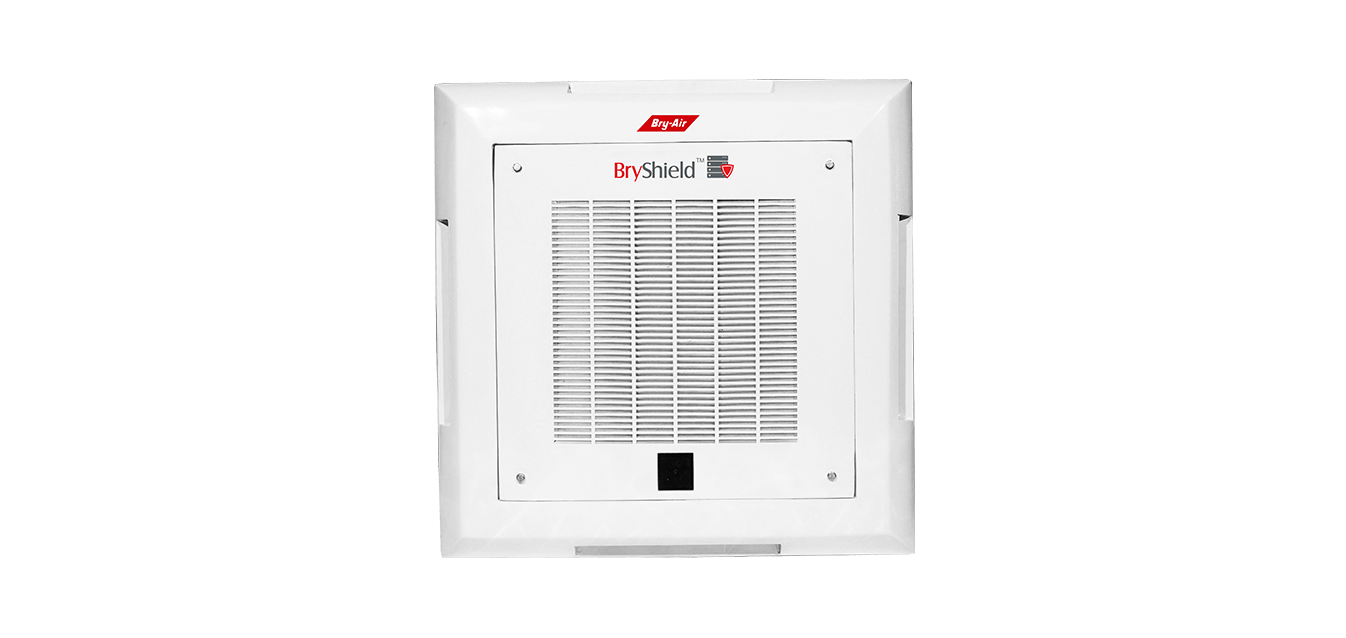
Bry-Air’s BryShield system follows a multi-stage process involving pre-filtration, DRISORB™ honeycomb chemical filtration, and further particulate filtration. The treated air is then returned to the room to support a cleaner environment around sensitive equipment.
Matching the Filter to the Contaminants
Not all chemical filters remove every gas equally well. The type of active media, chemical impregnation, airflow, contaminant concentration, and contact time all influence performance.
Facilities should identify the likely contaminants before selecting a filtration system. Where the consequences of contamination are significant, environmental assessments and appropriate monitoring can help establish the filtration requirements.
How Can Gas-Phase Filtration Improve Equipment Reliability?
Reducing Corrosion-Related Risks
Removing or neutralising targeted corrosive gases helps reduce exposure of susceptible electronic components to harmful contaminants. This can support the protection of circuit boards, electrical connectors, and other sensitive parts.
Gas-phase filtration is particularly relevant where outdoor pollution, industrial emissions, or internal sources introduce corrosive compounds into conditioned spaces.
Although filtration can reduce contamination-related risks, it cannot guarantee that equipment failures will never occur. Reliability also depends on equipment design, electrical protection, maintenance practices, temperature stability, humidity management, and other operating conditions.
Supporting Uptime and Maintenance Planning
Unplanned equipment failures can interrupt business operations and increase maintenance requirements. Reducing environmental contamination may help limit one contributing factor, particularly where corrosion is a recognised concern.
A suitable filtration system should form part of a broader preventive maintenance programme. Regular inspections, filter replacement, air-quality monitoring, and equipment condition assessments help verify that the system continues to operate as intended.
These measures also allow facility managers to identify changing contamination conditions before they become a more significant operational issue.
What Should You Consider When Selecting an Odour Control System?
Identify the Source and Type of Contamination
Odours can originate from various gases and volatile compounds released by industrial processes, drainage systems, building materials, chemicals, or other sources. Some odorous compounds may also contribute to indoor air-quality concerns, although odour intensity alone does not establish toxicity or corrosion potential.
An effective filtration strategy begins with identifying the likely contaminants and determining whether the objective is odour reduction, corrosive gas removal, particulate control, or a combination of these requirements.
A suitable Odour Control System should be selected according to the pollutants it is designed to treat. For general industrial or commercial odour control, equipment specifically engineered for the application may be more appropriate than a compact server-room filtration unit. Bry-Air offers separate odour control solutions for applications requiring the treatment of gaseous pollutants and particulate contaminants.
Evaluate Airflow and Room Conditions
The required airflow depends on room volume, contamination levels, air leakage, ventilation arrangements, and the rate at which pollutants enter the space. The system must circulate enough air through the filter media to achieve the intended treatment performance.
For electronic equipment rooms, BryShield is available in 100 CFM and 250 CFM models, according to the company’s published product specifications. These compact units are designed for smaller server rooms and similar environments. Larger spaces or higher contamination loads may require other gas-phase filtration configurations.
Equipment selection should account for the actual airflow requirements and the expected pollutant load rather than room size alone.
Plan for Filter Replacement and Monitoring
Chemical filtration media have a finite service life. Their effectiveness depends on contaminant concentration, operating hours, media capacity, and the specific gases being treated.
Bry-Air states that BryShield’s DRISORB™ honeycomb chemical filters typically last over a year, although actual replacement intervals vary with operating conditions. Maintenance planning should include inspection of pre-filters, assessment of filter condition, and replacement according to the manufacturer’s recommendations.
Monitoring indoor air quality and reviewing environmental conditions can also help determine whether the filtration system remains suitable for the facility’s needs.
How Can Businesses Build a More Effective Air-Quality Strategy?
Combine Filtration With Environmental Controls
Air filtration works best when integrated with other environmental management measures. Appropriate ventilation, controlled access, humidity management, room sealing, and regular maintenance can help reduce the entry and accumulation of contaminants.
The correct combination depends on the facility’s operating environment. Server rooms exposed to corrosive gases may require specialised gas-phase filtration, while facilities with excessive humidity may also need dedicated dehumidification equipment.
Follow Relevant Technical Standards
Equipment selection should be supported by appropriate technical documentation and performance testing. Bry-Air states that its DRISORB™ honeycomb chemical filters are tested in accordance with ASHRAE 145.2 and ISO 1155-2 standards. Facilities should verify the applicability of these standards to the specific equipment and intended use before making a selection.
A documented maintenance schedule and regular review of air-quality conditions help ensure that filtration remains aligned with operational requirements.
Conclusion
Airborne molecular contamination can pose a significant environmental risk to sensitive electronic equipment, particularly when corrosive gases remain in circulation for extended periods. Although conventional air conditioning controls temperature and humidity, it may not remove these gaseous pollutants. Specialised gas-phase filtration can help address this gap by capturing and neutralising targeted contaminants.
The right solution depends on the pollutants present, required airflow, room conditions, filter media, and maintenance requirements. Honeycomb chemical filtration, when integrated with appropriate particulate filtration and environmental controls, can help reduce corrosion-related risks and support more reliable equipment operation.
Businesses should evaluate their specific air-quality requirements before selecting a system and establish a maintenance programme to preserve filtration performance. To discuss server-room protection, gas-phase filtration, or application-specific air-treatment requirements, visit Bry-Air’s Contact Us page.