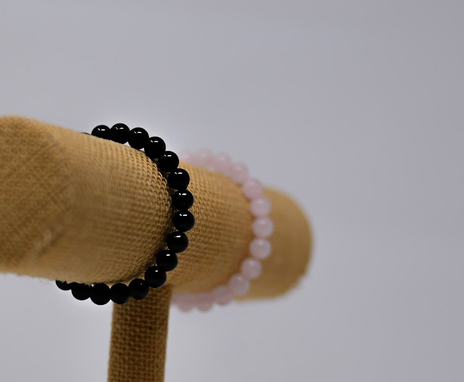

Why Bracelets Arrive the Wrong Size
On a product page, a bracelet can look exactly right. Then it shows up in the mail and something is off. It swings toward your hand whenever you lift your arm, or else it sits so close against your wrist that you notice it every single time you bend. Whatever went wrong happened before you clicked buy, back when the size was a guess rather than a measurement.
Your ring size tells you nothing about your wrist. A bracelet you once slipped on at a friend’s house isn’t a dependable stand-in either. Typing crystals shop near me into a search bar will turn up plenty of styles, sure, but your own wrist measurement gives you a better place to start before choosing a power bracelet or custom piece.
You don’t need special equipment. A flexible tape or a length of soft string, the right spot on your arm, and some sense of whether you like a closer or roomier fit will carry you most of the way.
Finding the Wrist Bone
Run your thumb along the side of your wrist, moving toward your hand, until you feel a small bony bump. That’s the wrist bone. A bracelet usually rests right there. Measure several inches up the forearm instead and you’ll get a wider number that doesn’t reflect where the bracelet actually sits.
Keep the tape level as it circles your wrist. Let it drift toward your hand and it may cross a different part of the wrist entirely. Let it slide higher up your arm and the number can make a bracelet seem looser than you expected once it’s on you.
Let your hand rest naturally while you measure. What you want is the wrist you have on an ordinary Tuesday, not a posed or tensed version of it.
Tape String or Guesswork
A soft tape measure is simplest. It bends around your wrist and lets you read the overlap point directly. Don’t have one? Use a soft, non-stretchy string or cord, mark the point where it meets itself, then take it off your wrist and lay that marked length against a ruler. The National Institute of Standards and Technology explains inch measurements if you need a quick refresher on reading a ruler.
A rigid ruler on its own can’t follow the curve of a wrist. It only works after the string has already done the wrapping.
- Wrap the tape or string around the wrist bone.
- Hold it against the skin without pulling it tight.
- Mark the overlap point if you’re using string.
- Lay the string flat and measure it with a ruler.
Whatever you do, don’t rely on a visual estimate from a photo. Beads, clasps and metal links can all make a piece look larger or smaller than it will feel when it’s actually on your wrist.
Snug or a Little Give
Your wrist measurement is the starting point, not the whole fit decision. A close-fitting bracelet sits nearer the skin and barely moves. One with more give shifts a little as you type, carry a bag, or reach for a sleeve.
Neither preference is wrong. The useful question is how you usually react to jewelry that moves around. If a watch band that slides distracts you, go closer. If you dislike the feeling of a bracelet staying in one place, look for a little more room when you compare the seller’s available sizes.
Keep in mind that a clasped bracelet and a stretch bracelet can feel different on the same wrist. Read the product description for the bracelet’s construction, then use your measurement alongside the fit guidance supplied for that particular style.
Printed Guides Aren’t Universal
Printed wrist guides and downloadable sizing strips work well enough as a second check, but they aren’t universal. One seller builds its guide around a close fit; another allows more room in the finished bracelet. A size label on its own tells you very little about how that bracelet will actually sit.
Use the guide that belongs to the bracelet you’re considering. Don’t carry a size from one shop over to another. Assuming every sizing chart starts from the same place is riskier than the measurement you take straight off your own wrist.
Some guides never say where to measure, or whether the sizes describe the wrist or the finished bracelet. When that detail is missing, pause before you choose, because it’s exactly what matters when you’re stuck between two nearby options.
See also: How to Get Started With Cryptocurrency
Professional Sizing Methods
Jewelry sizing depends on the tool and the technique, not a quick glance. The Gemological Institute of America explains how jewelers measure for an accurate fit in its guidance on finger and ring sizing, where proper measuring tools help avoid fit problems.
That guidance covers rings, not bracelets. The same basic habit still applies at the wrist, though: use a tool that follows the body part you’re measuring, take the reading where the jewelry will rest, and never substitute a rough estimate for an actual measurement.
Two decisions tend to get blended together here, and pulling them apart helps. First, find your wrist measurement. Then decide how close or relaxed you want the bracelet to feel once it’s on.
Common Measurement Mistakes
Measuring over a sweater cuff, a shirt sleeve or a bulky watch band adds material that won’t be there if you wear the bracelet against your skin. Measure directly on your wrist, with nothing tucked beneath the tape or string.
Pulling the tape tight is the other easy mistake. The tool should sit against your skin without digging in or leaving an indentation. Take a tight reading and you’ll likely end up with a bracelet that feels more restrictive than you intended.
Before you write the number down, check the location one more time. If the tape has crept up your forearm or slipped toward your hand, put it back at the wrist bone and measure again.
Where to Start
Start with a relaxed wrist and a flexible tape or soft string. Wrap it around the bony point near your hand, note the overlap point, and keep that reading separate from your preference for a close or roomier bracelet.
There’s no need to guess from a ring size, an old bracelet, or a photo on a product page. A quick measurement gives you a useful baseline, while the bracelet’s style and your comfort preference help you choose from the sizes offered.
Grab a tape measure or string and measure your wrist before placing an order.