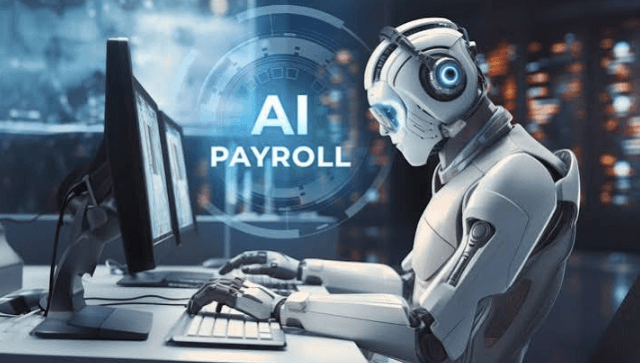

Artificial intelligence in payroll management promises measurable gains in accuracy, speed, and compliance. It automates complex calculations, reconciles data from multiple sources, and provides continuous validation. AI enforces multi-jurisdiction rules and integrates real-time regulatory updates, supporting scalable governance. Analytics transform payroll data into actionable insights while safeguarding data, access, and lineage. A structured roadmap emphasizes data readiness and phased implementation, enabling proactive decision-making and adaptable controls. The approach invites scrutiny of its practical boundaries and long-term reliability.
What AI Delivers in Payroll Accuracy and Speed
AI-driven payroll systems enhance accuracy and speed by automating complex calculations, rules enforcement, and data reconciliation across sources. The approach concentrates on data quality and error reduction through continuous validation, anomaly detection, and standardized data flows. By leveraging process automation, processing cycles shorten, transparency rises, and auditing becomes straightforward, enabling proactive decisions while preserving flexibility and empowerment for diverse organizational needs.
How AI Handles Compliance Across Jurisdictions
When navigating multi-jurisdiction payroll requirements, compliance handling hinges on systematic rule management, real-time updates, and rigorous cross-border validation. AI systems apply compliance automation to encode local regulations and automate filings, while jurisdictional mapping aligns obligations with specific regions. Proactive monitoring detects drift and gaps, enabling timely remediation; this discipline supports scalable, transparent payroll operations across complex regulatory landscapes for freedom-minded organizations.
See also: Artificial Intelligence in Oil and Gas
Analytics and governance form the bridge between raw payroll data and actionable outcomes. In this framing, analytics translate datasets into insights that inform decisions, while governance ensures integrity, compliance, and accountability.
Accuracy metrics quantify reliability, sensitivity, and timeliness of results, enabling continuous improvement. Data governance structures guard metadata, access, and lineage, fostering trust and auditable processes across the payroll analytics lifecycle.
Implementing AI in Payroll: Roadmap and Considerations
The roadmap for introducing AI into payroll encompasses scoping, data readiness, governance, and impact measurement, with a focus on delivering reliable automation while preserving compliance.
The approach emphasizes structured data lineage, robust risk assessment, and transparent controls.
Stakeholders assess feasibility, scalability, and monitoring needs, ensuring adaptive governance, phased implementation, and continuous validation to minimize disruption and maximize decision certainty.
Frequently Asked Questions
How Does AI Handle Exceptions and Manual Overrides in Payroll?
AI handles exceptions and manual overrides by flagging anomalies, routing them to human review, and applying auditable rules. It supports controlled manual overrides with provenance, rollback options, and compliance checks, ensuring proactive, precise decision-making while preserving operational freedom.
Can AI Improve Employee Self-Service Experience Beyond Basic Payroll Tasks?
AI can enhance employee self-service beyond payroll basics by guiding inquiries, clarifying benefits, and automating routine HR tasks, while upholding AI ethics, data minimization, and AI governance; open questions remain about trust, transparency, and user autonomy.
What Are Best Practices for Auditing AI Decisions in Payroll Systems?
Auditors should establish rigorous audit trails, implement bias mitigation protocols, enforce data governance, and perform ongoing model validation; these steps enable proactive scrutiny, transparency, and freedom to adapt AI payroll decisions while preserving accuracy and compliance.
How Does AI Impact Payroll Data Retention and Privacy Timelines?
“Actions speak louder than words.” AI impacts payroll data retention and privacy timelines by necessitating strict data governance and explicit retention schedules, while emphasizing model transparency, proactive auditing, and controls that align with freedom-minded regulatory compliance and data minimization.
Will AI Fully Replace Human Payroll Staff or Augment Their Roles?
AI will augment, not fully replace, human payroll staff, as governance and data lineage requirements constrain automation. Proactive adaptation emerges: governance frameworks ensure accountability, while data lineage clarifies decision provenance and supports scalable, freedom-minded operational resilience.
Conclusion
In a quiet harbor, a trusted lighthouse keeper—AI—maps shifting tides of regulation, guiding ships of payroll through storms of complexity. Each beam locks onto data currents, consistent and clean, while the fog of jurisdictional rules thins under relentless validation. The keeper’s lantern shares real-time insights with sailors, enabling agile course corrections and compliance at scale. With governance as steady helm and analytics as sea chart, payroll integrity arrives safely at every horizon.